
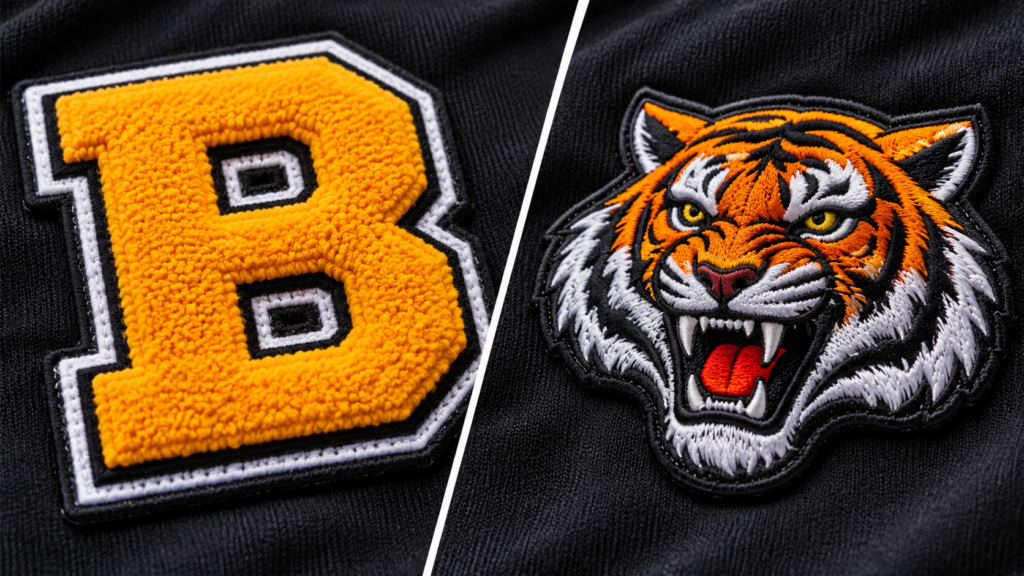
Chenille vs Embroidered Patches
Short answer: Chenille patches have a thick, soft, raised surface made from chenille yarn, and they suit large letters, numbers and simple bold shapes, which is why they are linked with varsity jackets. Embroidered patches use finer thread stitched in tight rows, so they hold more detail and suit logos, small text and compact designs. Neither is universally better. The right choice depends on your artwork, size and where the patch will be worn.
If you are deciding between the two, this guide explains how they differ, where each works best, what limits each one has and what to check before you order.
Top summary answer
- Choose chenille for large, simple artwork where texture and visual weight matter: letters, numbers, mascots, award patches.
- Choose embroidery for detailed or small artwork where clarity matters: logos, crests, names, dates, fine lines.
- Consider combining them when you want a chenille shape with embroidered outlines or details on top.
- Decide on the smallest detail first. If the design relies on something fine, embroidery is usually the safer starting point.
Key takeaways
- The main practical difference is detail versus presence: embroidery resolves fine detail, chenille gives a plush, raised look but needs bolder shapes.
- Chenille normally needs a larger patch size than embroidery to look right. Your supplier should confirm size limits for your design.
- Both can be attached by sewing, and sewing is the usual choice for heavy garments. Other backings depend on the patch and garment.
- Chenille is often the higher-priced option at a similar size, but cost depends on size, colours and finish. Always compare written quotes.
- A mixed patch can solve the “I want both” problem, provided the fine details are kept in the embroidered areas.
What are chenille patches?
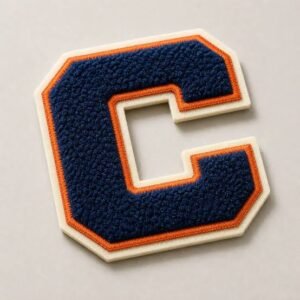
Chenille patches are patches made with chenille yarn, a soft, fuzzy yarn with short pile fibres that stand out from a central core. The yarn is typically stitched by machine onto a backing fabric such as felt or twill to build a raised, tufted surface. The word chenille is French for caterpillar, which describes the look well.
Because the yarn is thick and the pile stands proud, the design is formed from broad areas of colour rather than fine lines. Chenille is often finished with an embroidered border or embroidered detail layered on top.
What are embroidered patches?
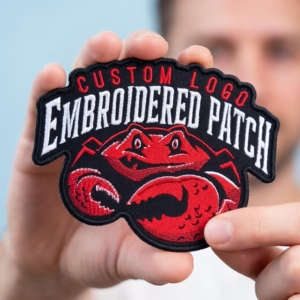
Embroidered patches are patches in which a design is stitched with thread onto a fabric base, usually twill or a similar material, often with a stitched border around the edge. Machine embroidery uses fine thread laid in dense rows, so the surface is smoother and flatter than chenille, with a visible stitch texture.
The finer thread is what allows embroidery to reproduce logos, lettering and outlines with more control. Embroidery can also include raised effects, such as 3D or puff embroidery, which is a separate technique from chenille.
What is the difference between chenille and embroidered patches?
The difference is the material and the stitching. Chenille patches build the design from thick, pile-textured yarn, giving a soft, raised, tactile surface and bold shapes. Embroidered patches use fine thread in dense stitching, giving a flatter surface and sharper detail. Everything else, including cost, size limits and suitability, follows from that.
Chenille vs embroidered patches: comparison table
| Factor | Chenille patches | Embroidered patches |
|---|---|---|
| Appearance | Plush, raised, collegiate look | Neat, stitched, clearly defined look |
| Texture | Soft, fuzzy, tufted pile | Smooth to slightly ridged, visible thread direction |
| Design detail | Limited. Works best with simple shapes | Higher. Handles small elements, outlines and gradients of colour better |
| Large lettering | Excellent. The standout use | Good. Clean, but with less of the raised effect |
| Small logos and text | Usually poor. Thick yarn can fill in gaps | Usually the better choice, within minimum text and line limits |
| Thickness | Thicker and more padded | Thinner, flatter profile (raised embroidery is thicker) |
| Best applications | Varsity and letterman jackets, school and team wear, award patches, statement fashion pieces | Uniforms, workwear, caps, bags, club badges, branded clothing |
| Design suitability | Bold mascots, initials, numbers, simple symbols | Logos, crests, mottos, character artwork, multi-colour designs |
| Cost considerations | Often higher at a comparable size because of the material and process. Varies by size and colours | Often lower at comparable size. Rises with size, stitch count and colours |
These are general characteristics. The result for your design depends on artwork, size and the manufacturer’s capabilities.
Which is better for detailed logos?
Embroidered patches are usually better for detailed logos, because the finer thread can follow small shapes, thin lines and tight text. Chenille yarn is thick, so fine elements tend to merge or disappear. If your logo has small lettering, a tagline or thin outlines, start with embroidery.
Even embroidery has limits. Our guidance for embroidered text is a minimum height of about 6 mm (¼ inch) in a bold, simple typeface. Very small text can lose definition and may suit a woven patch better.
Which is better for large letters, numbers and bold designs?
Chenille is usually better for large letters, numbers and bold shapes. The thick pile has enough space to show its texture, and the raised surface gives simple artwork real visual weight. This is why single initials, jersey numbers and mascots are common chenille subjects.
The key word is large. A big “B” in chenille looks strong. Shrink the same letter and the yarn can crowd the edges.
Are chenille patches good for varsity and letterman jackets?
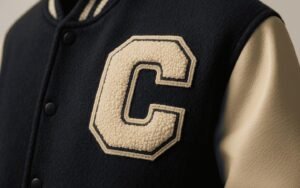
Yes. Chenille is the traditional choice for varsity and letterman jackets, because a bold raised letter suits the heavy fabric of a wool body with leather sleeves, and because the style is closely associated with the look. Many jackets also use chenille for the main letter and embroidery for the smaller details around it.
For UK schools, colleges and clubs, that mixed approach is often the practical one: a large chenille initial or number, plus embroidered year bars, names or sports symbols.
Which patch type is better for small logos?
Embroidered patches are generally better for small logos. Chenille needs room for the pile, so small chenille patches work only with very simple artwork. If you need a small patch for a cap, chest pocket or sleeve, embroidery is normally the safer choice. Your supplier should confirm the minimum workable size for your design.
Can chenille and embroidery be combined in one patch?
Yes. Chenille and embroidery are commonly combined: chenille forms the large, bold areas and embroidery adds outlines, small text, borders or fine details on top. This gives you the raised look of chenille without losing important detail. Planning matters: put anything you need to read closely in the embroidered areas, not in the chenille.
Are chenille patches thicker than embroidered patches?
Yes. Chenille patches are generally thicker and softer than standard embroidered patches because the yarn pile stands proud of the base. Raised embroidery, such as 3D or puff embroidery, can also add height but through a different method, and it usually suits caps and smaller designs better than large jacket pieces.
How do backing and attachment options differ?
Both patch types can be sewn on, and sewing is the most dependable option for heavy garments such as wool, leather and padded jackets. Other backings, such as iron-on, hook-and-loop (Velcro) or adhesive, depend on the patch’s thickness, size and the garment fabric.
- Sew-on: suitable for both types. Usually the preferred choice for chenille on varsity jackets.
- Iron-on: more common on embroidered patches for lighter fabrics. Heat can compress chenille pile, and heat-activated adhesive may not hold well on thick or textured garments, so check with your supplier first. Our iron-on versus sew-on guide covers the trade-offs.
- Hook-and-loop: useful when the patch needs to be removable, for example a team patch moved between jackets. Check how it works with the patch’s thickness.
- Adhesive: a temporary option. Not a sensible choice for a chenille letter on a jacket you will wear and wash regularly.
Treat this as general guidance. The suitable backing depends on your garment and how it is cleaned.
Which patch is better for hoodies, uniforms, caps and bags?
| Use | Usual starting point | Why |
|---|---|---|
| Varsity or letterman jacket | Chenille, often with embroidered detail | Large letters and numbers suit the jacket’s heavy fabric |
| Hoodie | Either. Chenille for streetwear statements, embroidery for logos | Thick chenille can add bulk on lighter fabric |
| School or work uniform | Embroidery | Compact, clear and consistent branding |
| Cap | Embroidery, or raised embroidery for bold lettering | Small, curved surface limits thick yarn |
| Bag or backpack | Either | Placement and size matter more than type |
| Sports club blazer or jacket | Embroidery for crests, chenille for letters | Match the patch to the level of detail |
See our guide on choosing the best custom patch for your jacket for placement and size advice.
How do I choose between chenille and embroidered patches?
Start with the finest detail in your artwork, then check size, garment and budget. If the design depends on fine detail, choose embroidery. If it is built around large simple shapes and you want texture, choose chenille. If you want both, ask about a combined patch.
Decision guide
- Find the smallest important detail. Small text, thin lines or intricate shapes point to embroidery.
- Check the size. Chenille works best on larger patches. Small placements favour embroidery.
- Consider the garment. Heavy jackets suit chenille. Caps, shirts and lightweight fabrics often suit embroidery.
- Think about viewing distance. If it needs to read from across a room or pitch, bold chenille works. If it needs to be read close up, use embroidery.
- Decide how much texture you want. Chenille is soft and raised. Embroidery is neater and flatter.
- Choose the backing separately. It depends on garment and use as well as the patch type.
- Compare quotes and proofs. Ask for a digital proof before approving production.
| If you need… | Choose… |
|---|---|
| Big initials, numbers or a simple mascot | Chenille |
| A detailed logo or crest | Embroidery |
| Small text, dates or a motto | Embroidery (or woven for very fine text) |
| A raised, collegiate look with some detail | Combined chenille and embroidery |
| A patch for a cap | Embroidery or raised embroidery |
| A patch on a heavy jacket | Chenille or embroidery, sewn on |
| The lowest likely cost for a given size | Embroidery is often the lower-priced option, but compare quotes |
Which patch type should a clothing brand choose?
Brands should choose according to the artwork and the look they want. Embroidery suits logos, badges and consistent branding across many garments. Chenille suits statement pieces, collections with a collegiate or streetwear style, and bold lettering. Many brands use both: embroidery for the core logo and chenille for seasonal or hero designs.
For volume orders, request a sample or proof first. A chenille patch that looks good on screen may feel heavier on a lighter garment.
What affects the cost of chenille and embroidered patches?
Cost mainly depends on size, number of colours, design complexity, finish, backing and order quantity. Chenille often costs more than embroidery at a similar size because of the yarn and process, but a large, dense embroidered patch can cost more than a small chenille one. Price is therefore specific to your design.
Things that typically influence the quote:
- Patch size
- Number of colours
- Stitch density or amount of yarn coverage
- Border style
- Combined chenille and embroidery
- Base fabric
- Backing type
- Quantity
- Artwork preparation and any redrawing
We do not quote fixed prices in articles. Send your artwork and quantity and we will give you a written quote.
What should I check before placing an order?
Check the final size, the smallest text or line, the colours, the garment and the backing before you approve anything. Most disappointing patches are caused by artwork that looked fine on a screen but was too detailed for the chosen method.
- Real size: print your artwork at actual size and hold it against the garment.
- Smallest text: keep text bold and simple. For embroidery, aim for at least about 6 mm (¼ inch).
- Line thickness: very thin lines may not stitch cleanly in either type.
- Colour count and matching: supply Pantone references if you have them.
- Contrast: check the patch against the garment colour.
- Backing and care: decide how it will be attached and how the garment will be washed.
- Proof: approve a digital proof, and ask whether a physical sample is possible for larger orders.
Our guide to ordering patches from your own design explains the artwork steps.
What are the limits of each patch type?
Chenille limits: it needs bold, simple artwork and generally a larger size. Fine text can fill in. It is thicker, which is not ideal for every garment or placement. Pile can be compressed or snagged by heavy rubbing, so follow care advice.
Embroidery limits: it cannot reproduce photographic detail or very small text. Large designs can become heavy and stiff. It has less of the plush, raised look of chenille.
Neither type’s lifespan can be stated in general terms. Durability depends on materials, stitching density, attachment, garment fabric, washing and wear.
FAQs
Are chenille patches better than embroidered patches? Not universally. Chenille is better for large, simple, textured designs. Embroidery is better for detail and small sizes. The right one depends on your artwork.
What is the difference between chenille and embroidery? Chenille uses thick, soft pile yarn to form a raised, tufted surface. Embroidery uses fine thread stitched densely for a flatter, more detailed result.
Are chenille patches suitable for varsity jackets? Yes. They are the traditional choice for varsity and letterman jackets, especially for large letters and numbers. Sew-on attachment is the usual choice for heavy jacket fabrics.
Are embroidered patches better for detailed logos? Usually, yes. Finer thread follows small shapes and lines more closely. Very fine text may still need to be enlarged, simplified or made as a woven patch.
Can chenille and embroidered patches be combined? Yes. A common approach is chenille for the main shape with embroidered outlines or details on top.
Which patch type is better for small designs? Embroidery generally. Chenille needs space for the pile, so small chenille only works with very simple shapes.
Are chenille patches thicker than embroidered patches? Yes, as a rule. The raised pile makes chenille thicker and softer. Raised (3D) embroidery adds height by another method.
Which type should I choose for a clothing brand? Match it to the artwork. Embroidery for logos and consistent branding, chenille for bold statement pieces, or a mix of both.
Can I use chenille patches on caps? Occasionally, with simple designs, but embroidery or raised embroidery is generally more practical on a small curved surface.
Can I iron on a chenille patch? It depends on the patch and garment. Heat can flatten pile, and iron-on adhesive may not hold on thick or textured fabrics. Ask before ordering, and use sewing for heavy garments.
Do I need a minimum order? Our minimum order quantity is 25 patches per design. If you need multiple designs, each design must meet the minimum order quantity. Contact us for a quote based on your artwork and quantity.
What is the difference between chenille and woven patches? Woven patches use very fine threads woven into a flat surface, so they handle the smallest text and detail. Chenille is at the opposite end: thick, raised and bold.
Not sure which patch suits your design?
Send us your artwork, the size you need and the garment it is for. We will advise whether chenille, embroidery or a combination suits it, and show you a digital proof before production. Get a free quote